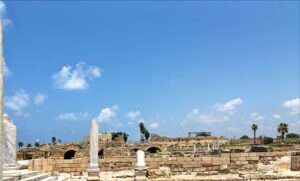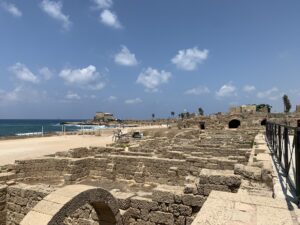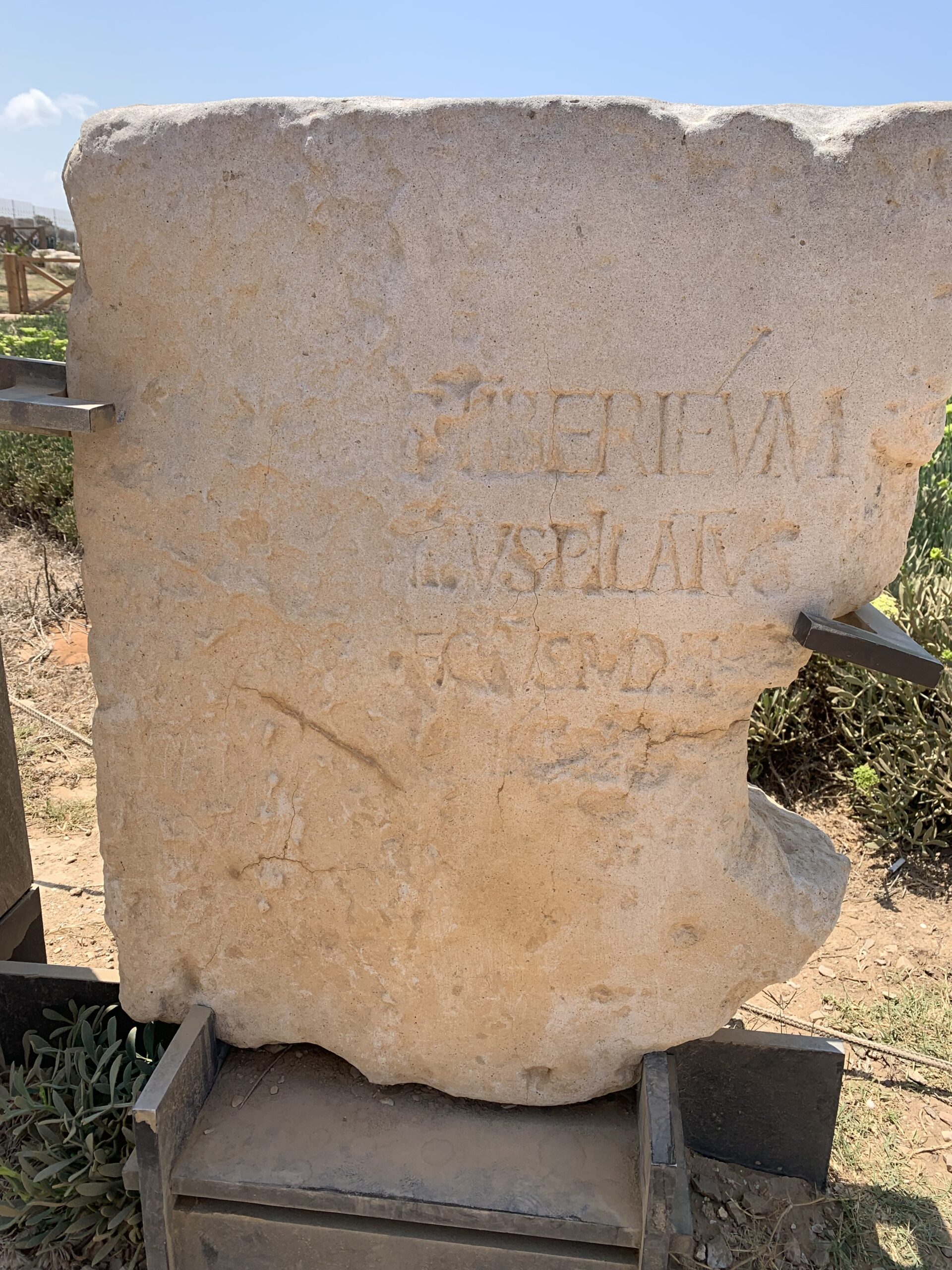
The Pilatus Stone, a remarkable archaeological find in Caesarea Maritima, bears an inscription that has captivated historians and biblical scholars alike. Dated to the years 26–36 CE, the stone contains a Latin dedication to Emperor Tiberius, shedding light on the tenure of Pontius Pilate as the Roman Prefect of Judea during the time of Jesus. This inscription not only validates Pilate’s historical existence but also provides a crucial historical context for understanding the political and cultural landscape of the region.
Beyond its affirmation of Pilate’s role, the Pilatus Stone offers a fascinating key to dating significant biblical events, particularly those related to the crucifixion of Jesus. The alignment between Pilate’s governance, as indicated by the stone, and the timing of the Passover dinner introduces a compelling chronological element that places the events of Jesus’ trial and crucifixion within a specific historical framework. Notably, the Passover dinner, a pivotal event in Jewish tradition, involves a special meal held on the evening of the 15th day of Nisan. Scholars have pointed out that only in the years 30 or 33 CE did the Passover dinner coincide with a Friday. This synchronicity between the historical marker on the Pilatus Stone and the biblical narrative adds depth to our understanding of the chronology surrounding Jesus’ trial and crucifixion, providing a unique intersection of Roman governance, biblical events, and ancient calendrical intricacies. The Pilatus Stone, therefore, emerges as a tangible link between Roman history and the religious traditions of the time, enriching our comprehension of this pivotal period.